1. Imagine This
- Imagine you own a house.
- You have doors, windows, valuable things inside, and people coming in and out every day. To keep it safe, you use locks, cameras, and maybe an alarm. You also keep an eye out for anything suspicious.
- Cybersecurity is the same idea — but instead of protecting a house, it protects computers, phones, apps, networks, and the information stored in them.
- So, what exactly is it?
2. What Exactly Is Cybersecurity?
Cybersecurity is the practice of protecting computers, networks, apps, and data from people who try to access, damage, or steal them without permission.
Let's break that down in plain words:
- Unauthorized access (someone getting into something without permission) — like a stranger walking into your house without you letting them in
- Attack (an attempt to steal, damage, or misuse something) — like someone trying to break your lock
- Data (information such as passwords, photos, bank details, and messages) — the "valuable things" inside your digital house
That's the basic idea.
Cybersecurity = keeping the digital version of your house safe.
3. What Do People in This Field Actually Do?
Cybersecurity isn't one job — it's a whole field with different kinds of work. Here are 5 common roles:
- Security Analyst — Watches systems and checks security alerts to spot anything suspicious, like a security guard watching CCTV screens.
- Penetration Tester — Gets permission to try breaking into a system to find weak spots before a real attacker does. Think of it as someone testing your locks by trying to break them, with your permission, so you know which locks are weak.
- Security Engineer — Builds security protections such as firewalls (filters that block unwanted network traffic), access controls (rules that decide who can access what), and monitoring tools.
- Incident Responder — Steps in after something goes wrong. They investigate what happened and work to stop the problem from getting worse — like a fire brigade responding to a fire.
- Security Architect — Plans how security should be built into a system from the beginning, rather than added later.
You don't have to be a "hacker" to work in cybersecurity. The field includes monitoring systems, building security, finding weaknesses, and responding when something goes wrong.
4. What Do They Work With, and Where Do We See It?
- What they work with: computers and servers, networks, apps and websites, cloud systems (services and storage that run over the internet), security tools, logs (records of activity), and user accounts and permissions.
- Where you already see it: banks, hospitals, e-commerce sites (websites where you buy things online), mobile apps, government systems, universities — basically anywhere that stores data or lets you log in.
5. What Cybersecurity Is NOT
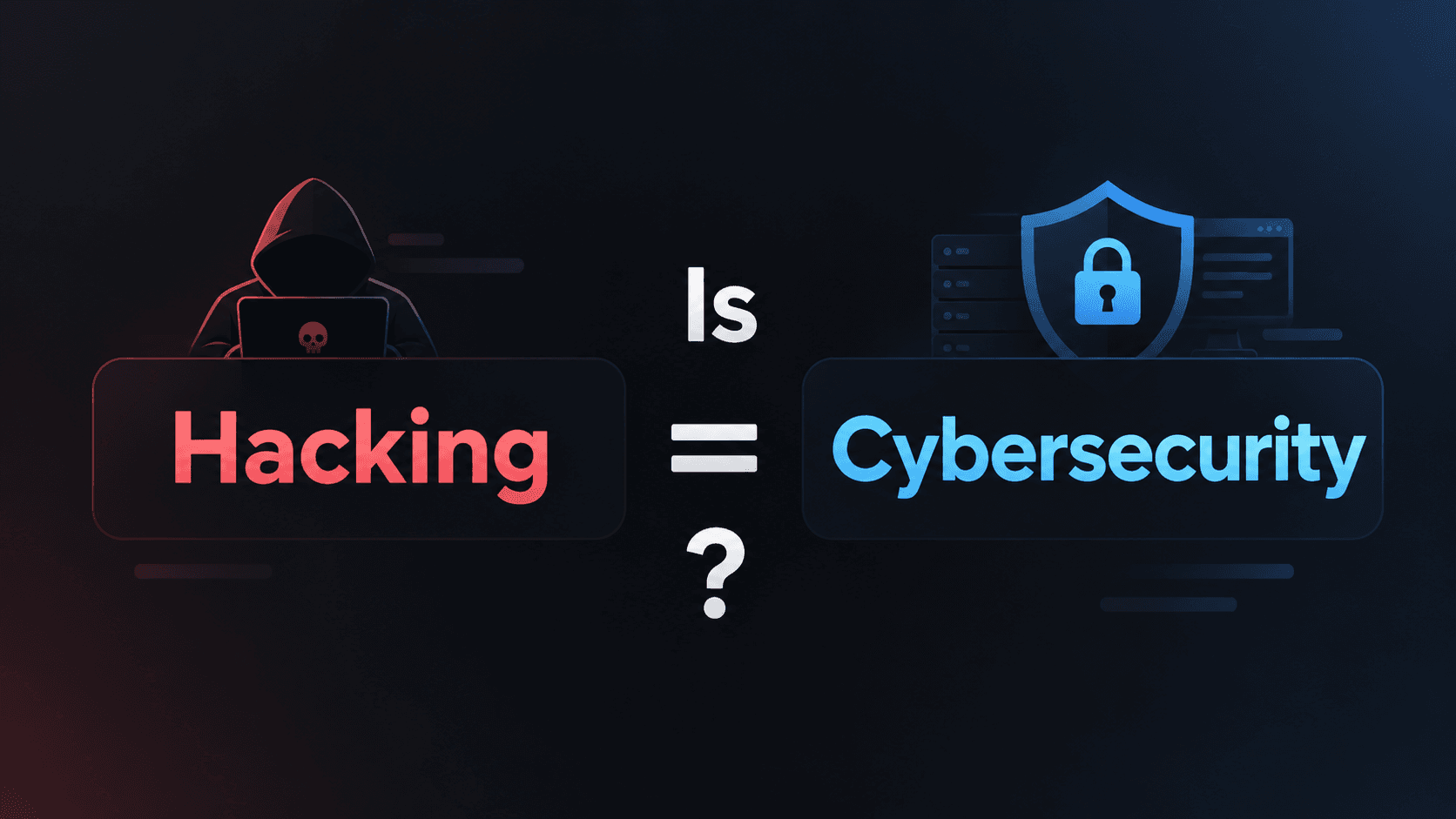
- A common misconception is that cybersecurity is mainly about hacking Instagram accounts or guessing passwords.
- That's not what the field is about.
- Hacking is only one part of cybersecurity, and when security professionals try to break into a system, they do it with permission. Other cybersecurity work includes watching systems, finding and fixing weak points, controlling access, and responding when something goes wrong.
6. Why Does It Matter?
- Almost everything today uses computers and stores data — your bank, your photos, your messages, hospital records, and much more.
- That creates opportunities for people to steal, damage, or misuse that information.
- Cybersecurity exists to reduce these risks and protect systems and the information stored in them.
7. What Should You Learn First?
If this interests you, here's an order that builds on itself. Learn the basics of each before moving to the next:
- Basic computer fundamentals — how computers work
- Networking — how computers and devices communicate with each other
- Linux — an operating system widely used in servers and cybersecurity
- Web fundamentals — how websites and web applications work
- Basic scripting — writing small programs to automate tasks
- Security fundamentals — the basic ideas behind protecting systems and information
The order is based on dependency — you need to understand computers and networks before many cybersecurity concepts start making sense.
8. The Big Picture
- Cybersecurity = protecting digital systems and information from misuse, attacks, and unauthorized access (access without permission).
- It's much bigger than hacking. It includes preventing problems, finding weaknesses, watching for suspicious activity, and responding when something goes wrong.
- If this field interests you, start by getting comfortable with how computers, networks, and websites actually work. Those basics will make cybersecurity much easier to understand later.